
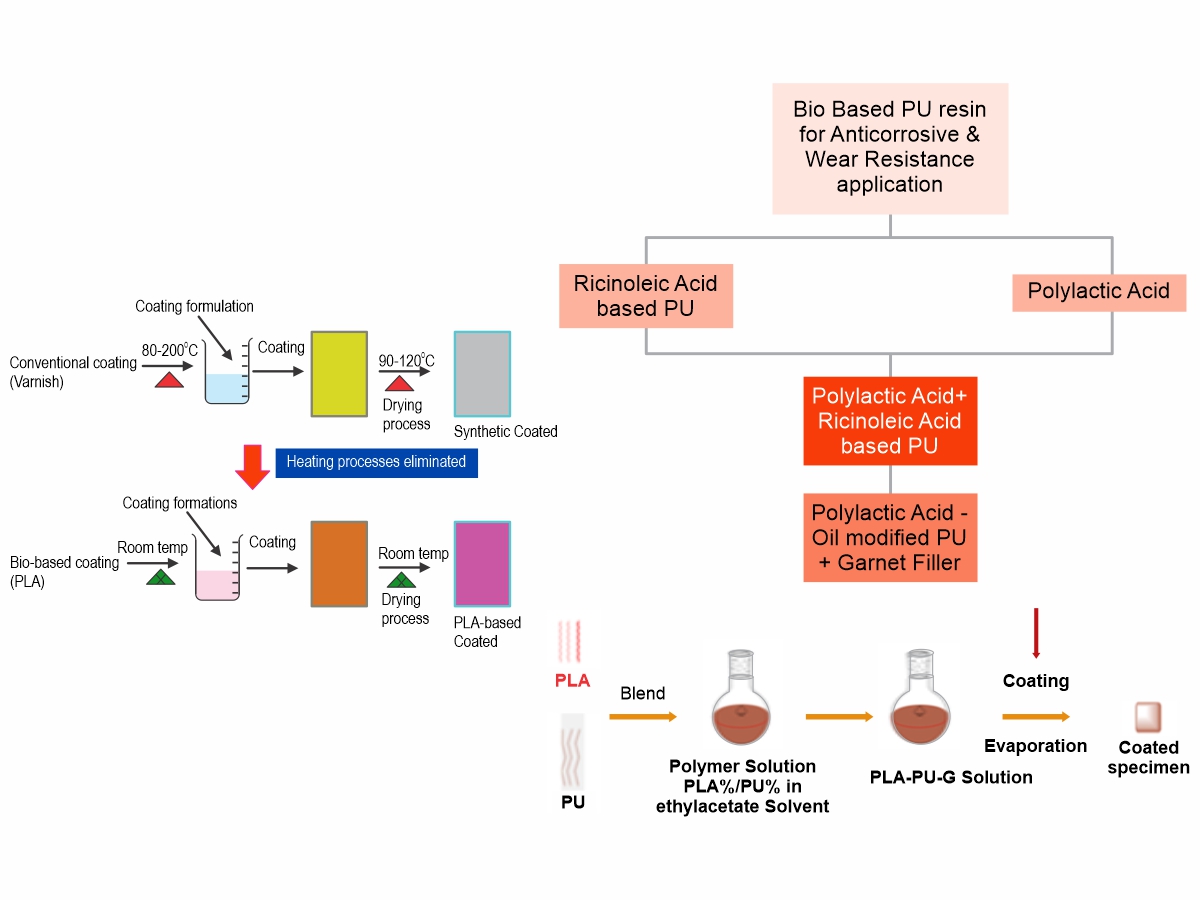
Development and Characterization of bio-based PLA-PU-Garnet coatings towards Anti-corrosion
reports the findings of this research. Although synthetic polymers offer excellent versatility in coating applications, due tointrinsic permeability to gases and vapours, including, but not limited to, oxygen, carbondio...


Cover Page
Microwave-Assisted Synthesis of Platinum-Nickel Nanoalloys
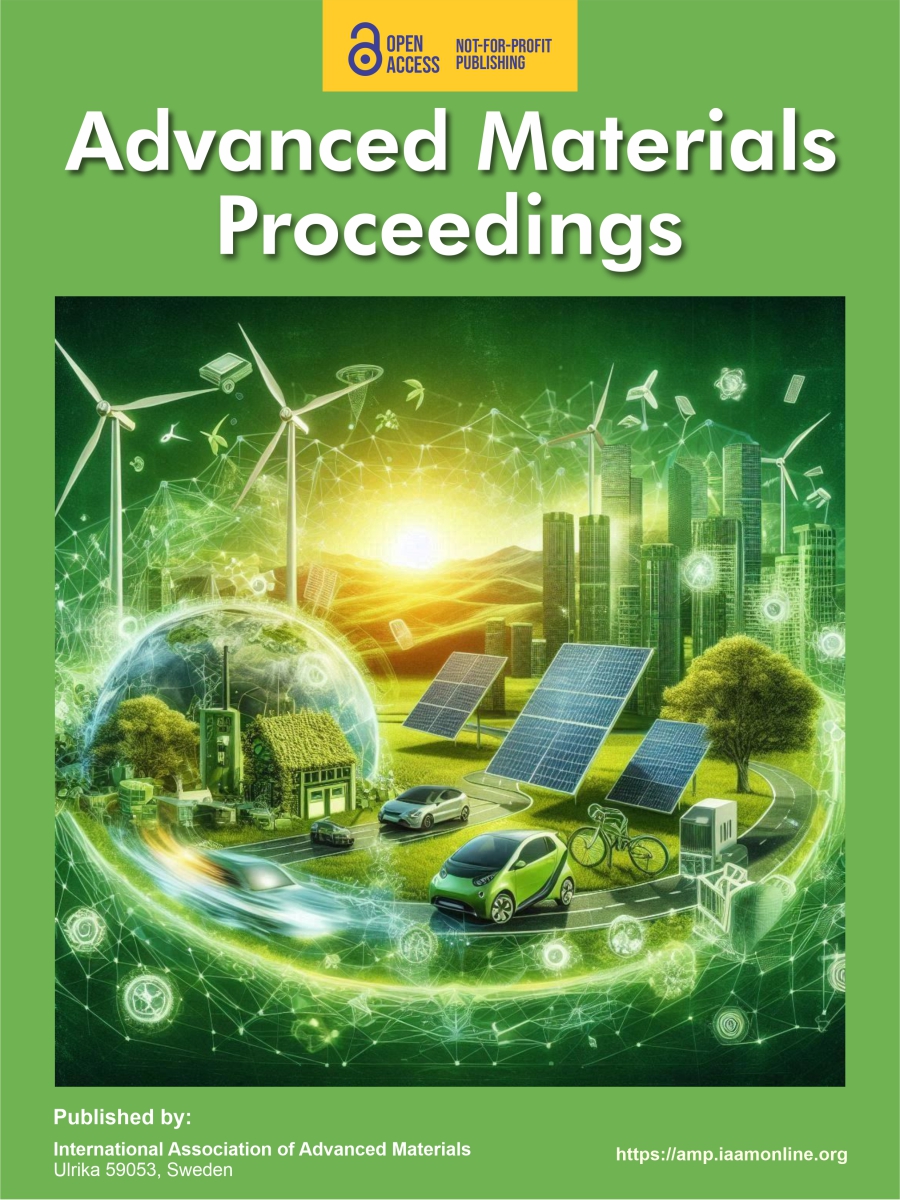
This cover visualizes the microwave-assisted synthesis of platinum-nickel nanoalloys on nitrogen-doped graphene and their practical applications such as water electrolysis and fuel cell. This research concentrates on the fast and facile synthetic procedure using microwave heating with reducing the amount of platinum and enhancing the catalytic performance by the control of lattice strain and nitrogen doping.
Browse issue 1 (Vol. 17)Recent Articles
Development and Characterization of bio-based PLA-PU-Garnet coatings towards Anti-corrosion
Although synthetic polymers offer excellent versatility in coating applications, due tointrinsic permeability to gases and vapours, including, but not limited to, oxygen, carbondioxide, and organic vapours, their application is highly limiting. On the other hand, somenatural polymers render great alternative to synthetic polymers in such areas of research. Inthis work, flexible polyurethane is used to make the PLA as flexible coating. Hence, ourpresent study is focussed on the development of PLA-PU hybrid organic polymer with theincorporation of garnet waste powder (in-organic) as coatings deposited by brush-coatingmethod on mild steel. To overcome the brittle nature of the PLA, a small amount ofpolyurethane having a rubbery nature is added along with garnet. The mechanical and barrierproperties significantly improved with the addition of a garnet (5%, 10%, and 15%) inPLA-PU blends. The various characterization techniques like Fourier Transform InfraredSpectroscopy (FTIR), Crosshatch test, contact angle, and morphological analysis by ScanningElectron Microscopy (SEM) and Electrochemical Impedance and Salt-spray and Cross-hatchadhesion tests are checked.
Application of active electric field in defect detection
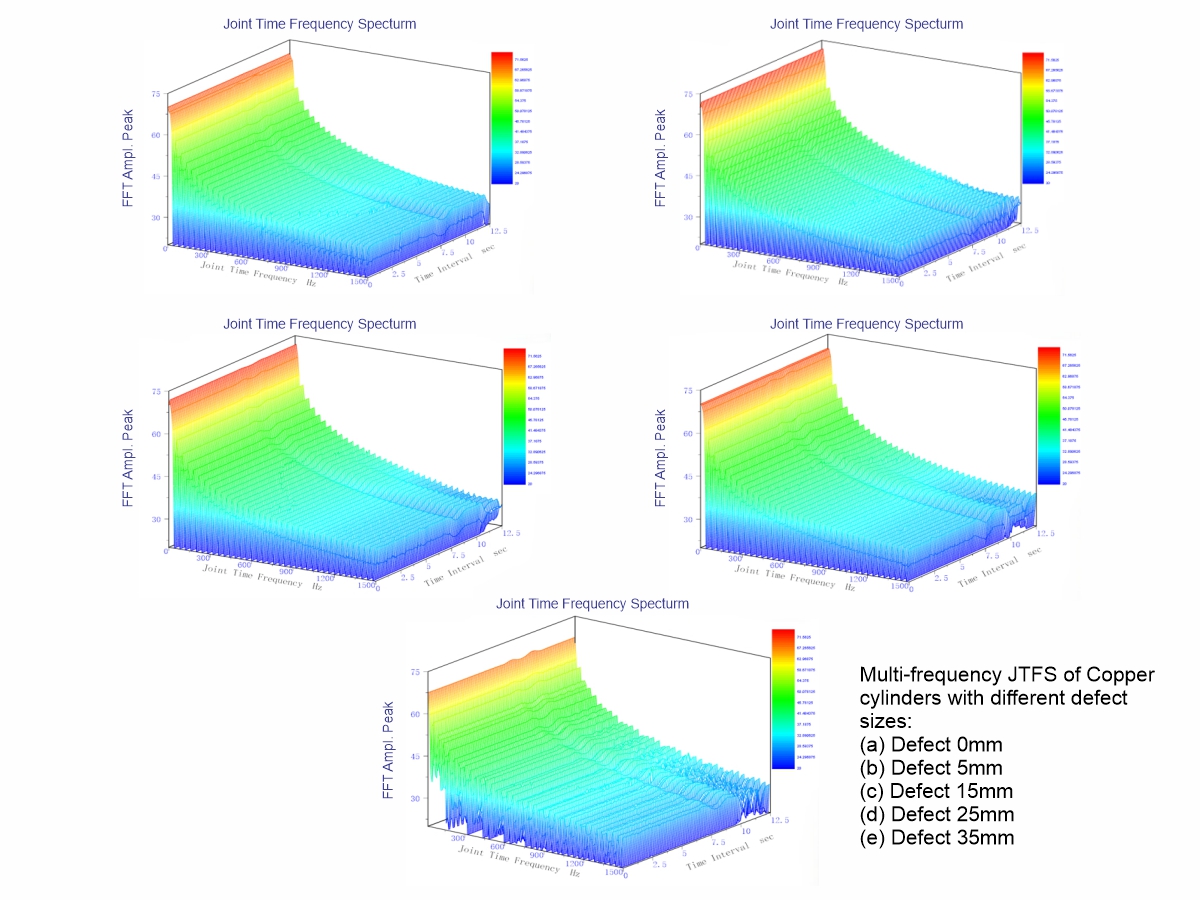
Inspired by the research on the active electrolocation organs of weakly electric fish in bionic engineering field, we proposed a new defect detection method based on the active electric field detection principle. In this study, we established an underwater defect detection experimental platform, and conducted joint time-frequency analysis and recognition algorithm on electric field signals collected during the experiment to obtain the joint time-frequency spectrogram (JTFS) and frequency inflection points (FIPs) of the detected objects. Through the JTFS and FIPs of the tested object (copper material) , we can get the defect size and position information and carry out further data processing in deeper exploration. This new defect detection method not only increases the types of defect detection methods, but also broadens the application range of active electric field. The study starts from the perspective of engineering experiments and demonstrates the feasibility and effectiveness of the novel defect detection method.
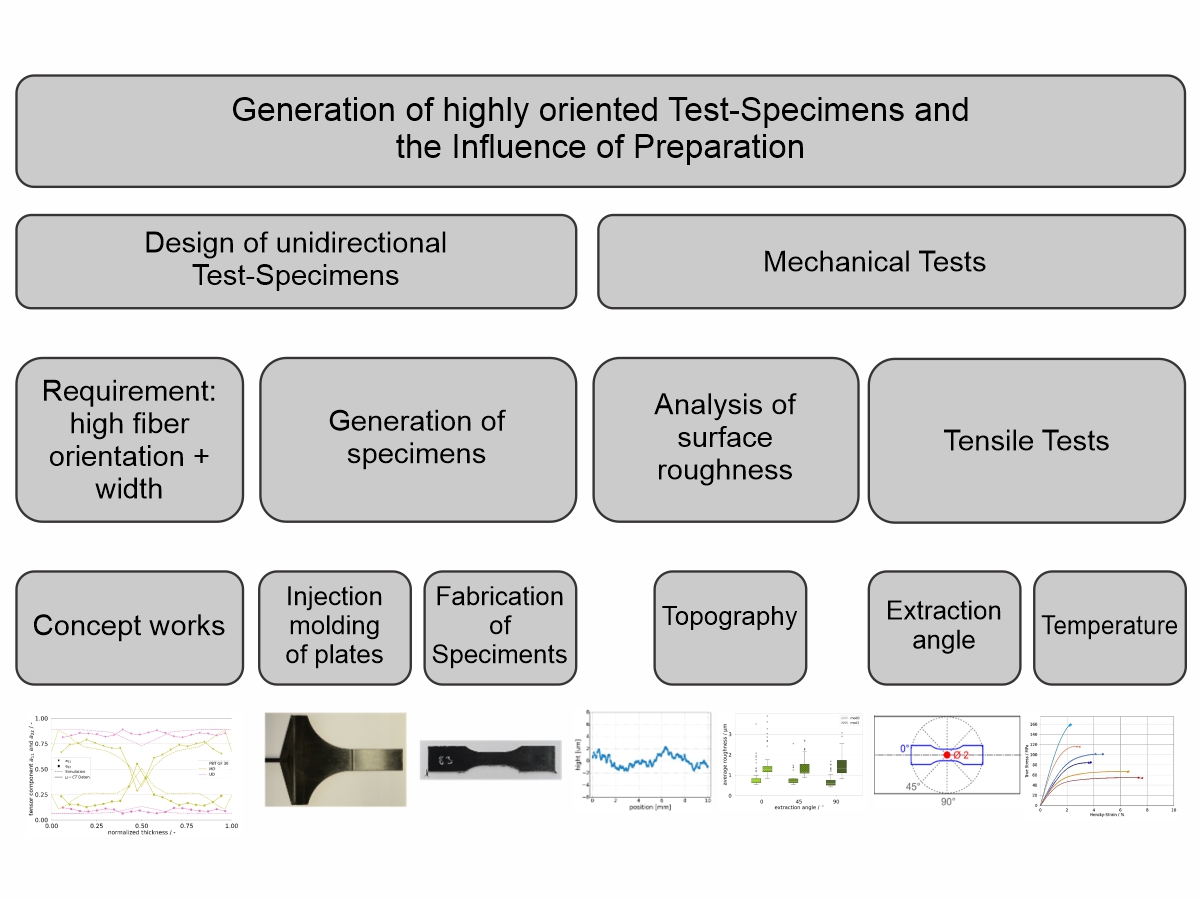
On the Generation of Highly Oriented Test Specimens and the Influence of Preparation
In the context of this contribution, a new injection molded unidirectional plate for specimen-extraction is introduced, as well as current investigations on the analysis of the preparation process are shown and discussed. The fiber orientation resulting from the injection molding (IM) manufacturing process leads to an anisotropic material behavior, which complicates a reliable design of components. Detailed determination of macroscopic, orientation dependent material data is continuous subject of research. In this context, samples with a predefined and high fiber orientation distribution are required. Established and available methods for specimens generated by IM show limitations. In this work, a novel test-specimen with a homogeneous high fiber orientation is introduced. It enables the extraction of specimens under different angles with respect to the main fiber orientation. The fiber orientation simulation of the new plate is compared to experimental computer tomography analysis. The extraction of specimens is achieved by machine milling. As the process may induce inaccuracies due to the introduction of inhomogeneous cutting, a detailed investigation of the influences of milling on the specimen behavior is required. A qualitative characterization of roughness values is necessary to evaluate the impact of the preparation on the mechanical properties. A correlation between roughness values and mechanical parameters is shown.
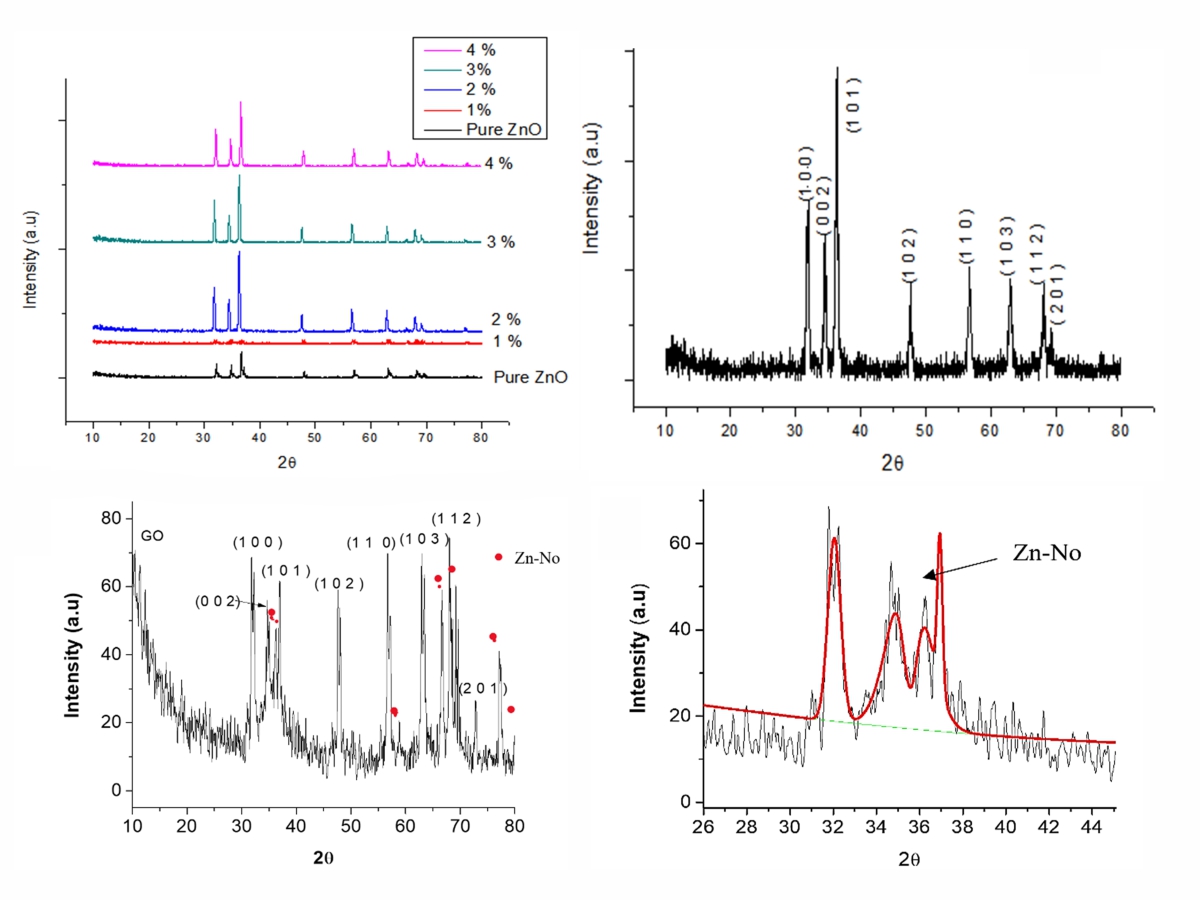
Intrinsic Defects Formation and Subsequent Direct and Indirect Transitions due to Ammonia in rGO – ZnO Nanocomposites
The rGO-ZnO composite was found promising improvement over the photocatalytic ability of pure ZnO and is useful for other Opto-chemical applications. ZnO/rGO composite was synthesized by the sol-gel method. The morphology of rGO caused better dispersion of the ZnO crystallites The reducing agent ammonia was varied in concentration during the synthesis. A reduction in the crystallization was observed for lower concentrations (0 – 1%) of ammonia which got stabilized in higher concentrations (>1%). The crystalline morphology showed variations from being close to amorphous to 38 nm. The average crystallite size was 15 nm. The rGO induced nonradiative phononic modes in the optical transition process when present in lower concentration but interestingly aided the crystallization process in a preferential crystallographic orientation which however got lowered in intensity for >2% ammonia concentration. The defect states formed in the rGO/ZnO composite in the form of oxygen vacancies, zinc interstitials, and vacancies caused a decrease in band gap due to indirect transitions. The role of ammonia in the performance of the composites was found to be significant
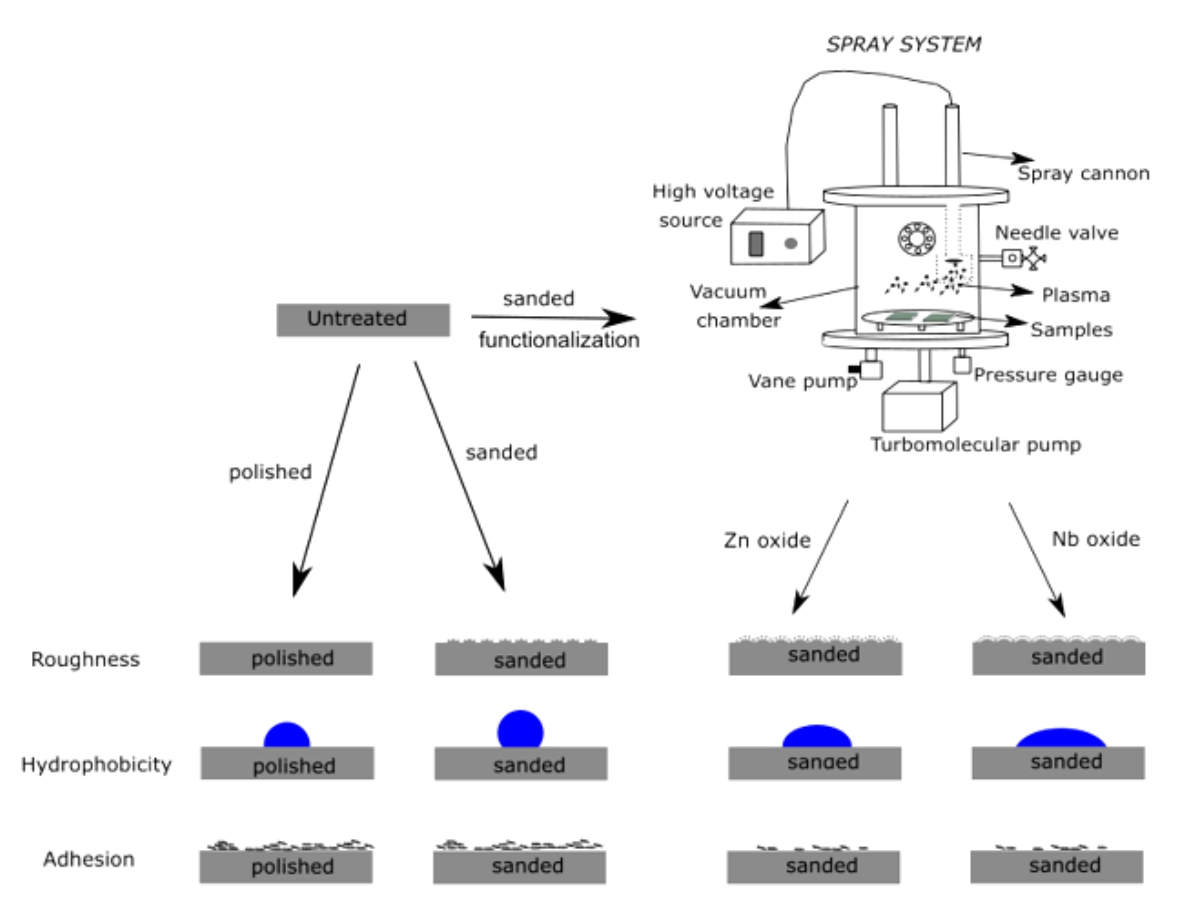
Modification of Stainless Steel with ZiNC and Niobium Oxides for Antimicrobial Effect
The microbial adhesion of pathogens on surfaces, followed by the formation of biofilms, constitute one important causes of diseases transmitted by foods. Biofilm control in the food industry is critical since biofilm removal is challenging. Thus, the functionalization of surfaces has been a strategy to prevent the multiplication of bacteria. This study aimed to functionalize stainless steel surfaces with zinc and niobium oxides and to analyze its antimicrobial capacity of Escherichia coli. In addition, the roughness surface was also investigated. The free energy of hydrophobic interaction was calculated by measuring the contact angle. The results showed that surface functionalization with metallic oxides efficiently controlled E. coli adhesion, achieving more than two decimal reductions in the initial population. It was found that the deposition of oxides modified the hydrophobicity of the stainless steel surface, making it hydrophilic, which may have added to the effect of functionalization for the antimicrobial efficiency of the obtained surface. The surfaces functionalized with zinc and niobium oxides had the highest roughness. Thus, surfaces with Nb and Zn oxides can be a promising alternative for application in the food industry to help control adhesion and obtain the final product of microbiological quality.
